Responsive, professional, first class deliverables -- especially considering that that the appraised assets are extremely complex financial assets with little by way of comps. The deliverable satisfied my accountants and advisers as being more than adequate to support the valuation needed to complete a conversion to a Roth IRA
Roth IRA Conversion Appraisal
IRS-qualified Fair Market Value (FMV) business appraisals and valuations for Traditional/401K to Roth IRA Conversions. Horizon IRA Conversion Appraisers value pre-IPO companies, LLCs, private equity investments, operating companies, real estate holding companies and more for HNWIs.
- Specialists in business valuations for IRA Conversions
- Robust analysis and defensible application of DLOC and DLOM when relevant
- IRS-qualified & USPAP-compliant FMV appraisal reports
Horizon IRA Conversion Appraisers conducts valuations of privately-held business interests in real estate, operating businesses, LP investments, and pre-IPO companies
If your retirement account holds assets without a readily available market price, your custodian will typically require an independent Fair Market Value before a Roth conversion. If the asset does not have a publicly traded price, your custodian will typically require independent valuation documentation. Horizon appraises all types of business interests, including:

IRA-Owned LLC Interests
Fair Market Value appraisals for single-member and multi-member LLCs held inside IRAs or Solo 401(k)s. Entity-level valuations when required by custodians prior to conversion.

Private Company & Partnership Interests
Valuation of minority or controlling interests in privately held businesses, limited partnerships pre-IPO privately-held shares, and investment entities lacking a readily available market value.

Real Estate Holding Entities
LLCs or partnerships that hold residential, commercial, or mixed-use property. We value the ownership interest — not just the underlying asset.

Alternative & Illiquid Investments
Notes, structured investments, private equity, fund interests, and other non-public assets requiring third-party FMV for Roth conversion reporting.
Horizon's credentialed business appraisers establish IRS fair market value for private shares converted to a Roth IRA
When you convert privately held shares held inside a self-directed retirement account, the IRS taxes the conversion on the fair market value of those shares as of the conversion date. Because interests in pre-IPO companies, closely held businesses, and venture-backed startups have no public trading price, that value must be established by a qualified, independent appraiser rather than estimated by the account holder.
IRS Publication 561 sets out how fair market value should be determined and documented for property that lacks an observable market price. A defensible report applies recognized valuation methodology, documents the ownership rights and transfer restrictions attached to the interest, and supports the concluded value with market evidence. This is the standard our appraisers work to on every conversion engagement, so the value you report to your custodian and the IRS is reasonable and supportable. Clients converting assets held through California entities can work with our California IRA conversion appraisers, who prepare reports to the same USPAP standard while accounting for the state income tax California applies to Roth conversions. Owners converting a minority or partial stake can review our fractional interest appraisal for IRA conversion service, which documents the control and marketability discounts that apply to non-controlling ownership interests. Investors converting an interest in a Qualified Opportunity Fund can review our QOF valuation for IRA conversion service, which measures the specific fund interest and applies the discounts that attach to an illiquid, non-controlling opportunity-zone position.
Horizon values self-directed IRA alternative assets for annual Form 5498 fair market value reporting
The reporting obligation for alternative assets does not end at conversion. Custodians must report the fair market value of every asset in a self-directed account each year on IRS Form 5498, which means privately held shares, pre-IPO equity, fund interests, and other illiquid holdings need a supportable valuation on an ongoing basis, not only at the moment of a Roth conversion.
When an asset has no readily available market price, custodians and tax advisors generally require an independent valuation to satisfy this annual reporting requirement. Our appraisers prepare fair market value reports for these holdings that are structured for custodian submission and built to withstand scrutiny, whether the value is needed for a conversion, an in-kind distribution, or routine year-end reporting.
Check Out Our IRA Conversion Calculator
Calculate The Cost & Benefits of Making an IRA Conversion with our Roth IRA Conversion Calculator
Insights
Insights on IRA Conversions and What to Expect
Roth conversion rules, valuation discounts, self-directed IRAs, and private stock appraisals.

Should You Convert a Self-Directed IRA to a Roth Before or After Retirement?
Converting a self-directed IRA's hard-to-value assets to a Roth isn't a single decision but a multi-year sequencing question, and the appraisal date drives the entire tax bill. This guide walks through the pre-retirement versus trough-years tradeoff and why the valuation has to come before the decision, not after.
Read more →
The IRS Penalty for Converting an SDIRA Asset Without a Qualified Appraisal
Converting an SDIRA asset to a Roth IRA without a qualified appraisal can trigger IRS accuracy-related penalties of 20% to 40% on the resulting underpayment, along with custodian delays and prohibited-transaction exposure. Here is how the IRC 6662 penalty structure works and why a qualified independent appraisal is your best defense.
Read more →
How Is a Roth Conversion Taxed When You Convert an Illiquid Asset?
Converting a rental property, private stock, or crypto position out of a traditional IRA triggers ordinary income tax on the appraised fair market value, with no market price to check the number against. This guide walks through the Form 8606 math, the 2025 bracket stacking, IRMAA exposure, and a full worked example.
Read more →
Madison Trust IRA Asset Valuation: A Step-by-Step Guide to the Annual Form
Madison Trust IRA asset valuation is the annual fair market value reporting your self-directed IRA custodian needs for IRS Form 5498. This guide walks through the form section by section and explains when a licensed professional must certify the value.
Read more →
Form 5498 Fair Market Value Rules for Self-Directed IRA Roth Conversions
IRS Form 5498 requires custodians to report the fair market value of hard-to-value self-directed IRA assets every year, and that same value sets the taxable amount when you convert to a Roth. Here is what boxes 15a and 15b require, why the conversion date valuation matters most, and what a qualified appraisal needs to show.
Read more →
What Does an Appraisal Cost for a Self-Directed IRA Roth Conversion?
A self-directed IRA Roth conversion appraisal is quoted as a fixed fee starting at $5,500 for an IRS-qualified report, with typical engagements running $7,500 to $12,000 depending on asset complexity. This guide breaks down what drives the cost of an appraisal for a self-directed IRA Roth conversion and how to keep the scope predictable.
Read more →
How Lack of Marketability and Minority Interest Discounts Affect SDIRA Roth Conversions
A Roth conversion of self-directed IRA assets is taxed on fair market value, and a properly supported discount for lack of marketability or minority interest can lower that value and your tax bill. This guide explains how the discounts work, what a defensible appraisal must include, and who actually performs this valuation work.
Read more →
How to Value Alternative Assets in a SDIRA for Form 5498 Reporting
Every alternative asset in a SDIRA, from rental property to private equity, needs an annual fair market value for IRS Form 5498. This guide explains who is responsible for that valuation, which asset types trigger extra reporting, and what happens when the number is missing or wrong.
Read more →
The Roth IRA Conversion 5-Year Rule: How the Two Clocks and the Age 59 1/2 Exception Work Together
The Roth IRA conversion 5-year rule and the Roth earnings 5-year rule are two different clocks with two different jobs, and confusing them can trigger a surprise 10% penalty. This guide breaks down both rules, the IRS distribution ordering rules, and exactly how the age 59 1/2 exception changes the math.
Read more →
What Is a Discounted Roth IRA Conversion and How Do Valuation Discounts Work?
A discounted Roth IRA conversion uses an independent appraisal to establish a defensible, discounted fair market value for illiquid self-directed IRA assets, so conversion tax is paid on that lower number instead of the nominal invested amount. This guide explains which assets qualify, how the discount is calculated, and what documentation the IRS expects to see.
Read more →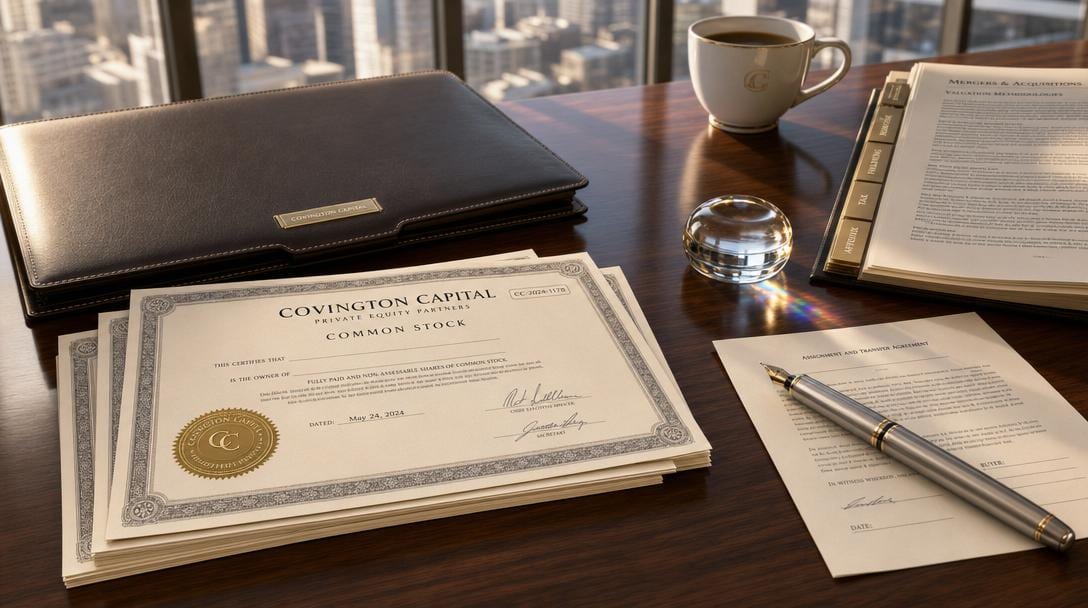
Private Stock Appraisal for IRA Conversions: What You Need to Know
A 409A valuation tells a pre-IPO company what price to put on employee stock options -- it is not an IRS-qualified appraisal for a Roth conversion. This guide explains exactly what that difference means for owners of privately held shares inside a self-directed IRA, and how to get the appraisal right before you convert.
Read more →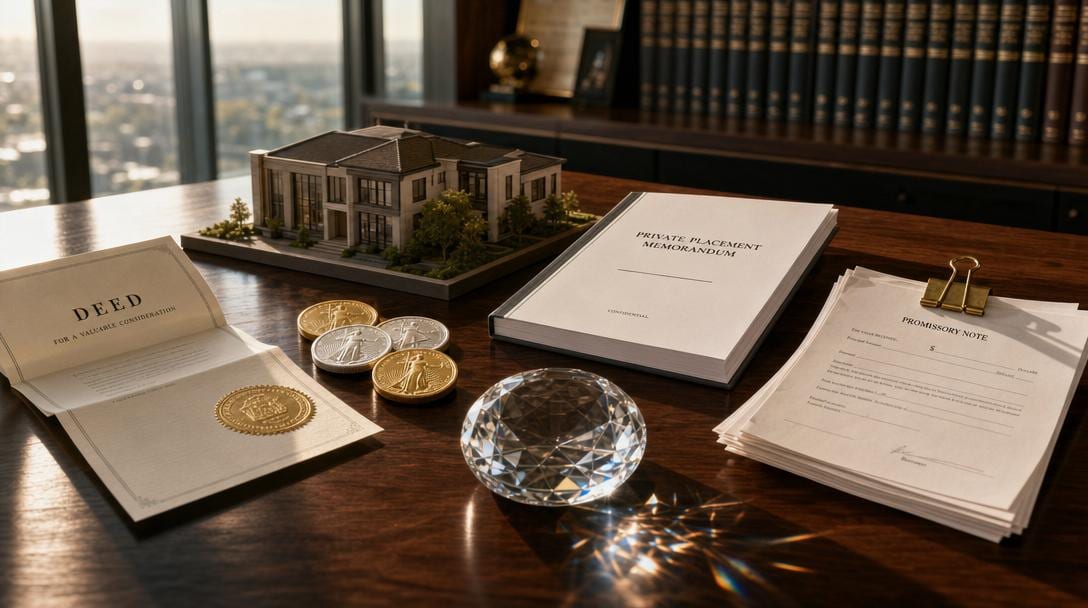
What is a Self-Directed IRA? Your Complete Guide to SDIRAs and Alternative Assets
A self-directed IRA lets you invest retirement savings in alternative assets, from real estate to private equity, that a standard brokerage IRA cannot hold. This guide explains how SDIRAs work, which assets are allowed (and which are not), and why annual fair market valuations are required.
Read more →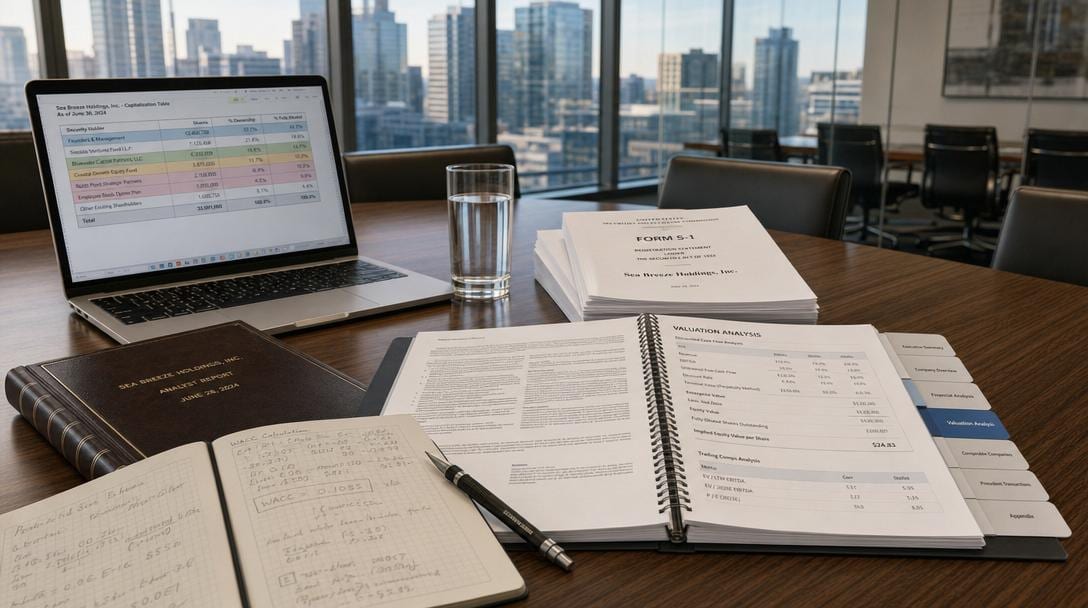
Pre-IPO Company Valuation Discounts in 2026: What SDIRA Holders Need to Know Ahead of SpaceX, OpenAI, and Anthropic Valuations
A pre-IPO company appraisal for Roth IRA conversion is a high-stakes tax event: the IRS taxes your SpaceX, OpenAI, or Anthropic position at fair market value on the conversion date. This guide covers the valuation approaches, discount methodology, penalty risks, and appraiser qualifications you need to convert defensibly in 2026.
Read more →
Client feedback
Clients trust Horizon for defensible IRA conversion appraisals
The team was highly knowledgeable, helpful, and efficient. I highly recommend their appraisal services, especially for private companies.
I found them professional & responsive. The report was quite thorough as well.
How Our Roth IRA Conversion Appraisal Process Works
Our valuation process is structured to deliver a clear, independent Fair Market Value determination suitable for custodian submission and tax reporting. From when we are engaged for the valuation work, most engagements complete within three to five weeks, with expedited delivery, as fast as 11 business days, available for custodian or filing deadlines.
- 01
Engagement & Scope Definition
We review the ownership structure, asset type, and intended conversion timing to clearly define the scope of work and issue your appraisal quote.
- 02
Information Collection
Once you decide if you'd like to move forward, we gather relevant financial statements, governing documents, capitalization tables, operating agreements, and other supporting materials necessary for a comprehensive analysis.
- 03
Independent Valuation Analysis
A credentialed valuation professional conducts a detailed analysis using appropriate valuation methodologies. Where applicable, ownership characteristics such as lack of control or lack of marketability are evaluated in accordance with accepted valuation standards.
- 04
Delivery of Signed Fair Market Value Report
You receive a structured, well-supported report prepared for Roth conversion reporting purposes and suitable for custodian and advisor review. We will also sign any additional documents you might need for your conversion.
Have questions?
Common IRA conversion appraisal questions, answered
What is an IRA conversion appraisal?
An IRA conversion appraisal is an independent Fair Market Value determination of assets held inside a retirement account at the time of conversion. When assets do not have a publicly traded market price — such as LLC interests, private companies, partnership interests, or other alternative investments — a qualified third-party valuation is typically required to support the value reported for tax purposes. The appraised Fair Market Value determines the amount of income recognized on the conversion.
When is an appraisal required for a Roth conversion?
An appraisal is generally required when the assets being converted do not trade on an established public market.
Common examples include:
- IRA-owned LLC interests
- Closely held business interests
- Private equity or venture investments
- Limited partnership interests
- Real estate holding entities
- Promissory notes or private debt instruments
Publicly traded stocks and mutual funds typically do not require an appraisal because market pricing is readily observable.
How much does a business valuation cost?
Business valuation fees are scope-based and quoted as a fixed fee before any work begins. Lower-complexity engagements with a single, straightforward asset typically range from $4,500 to $6,500; medium-complexity assets requiring more robust analysis typically range from $8,000 to $12,000; and the most complex engagements, often requiring highly technical analysis for IRS or legal purposes, range from $15,000 to $20,000 or more. Most of Horizon's Business Valuation engagements fall in the $7,500 to $12,000 range. We review your specific financial assets before issuing a quote, so you'll know the exact cost before engaging our team.
How is fair market value determined for private shares in a self-directed IRA?
Fair market value for privately held shares is determined using one or more of the three recognized valuation approaches: the income approach, the market approach, and the asset approach. Our appraisers select and weight the approaches that best fit the company's stage, financial profile, and available data, then document the analysis so the conclusion is defensible under IRS standards. Where ownership characteristics warrant, adjustments such as discounts for lack of control and lack of marketability are applied and supported with market evidence.
Will my custodian or CPA accept the appraisal?
Yes, but we cannot guarantee this. All of our appraisals are conducted in compliance with USPAP and IRS standards by a qualified professional. Our reports are extremely robust and include detail on how the final FMV was determined.
How long does an IRA valuation take?
Most engagements complete within three to five weeks from when we are engaged, with expedited delivery available in as fast as 11 business days for custodian or filing deadlines. Tell us your conversion deadline and we will confirm up front whether we can meet it.
Get Started
Request an Appraisal
Fill out the form below and we'll get back to you within one business day.